Good morning from Lausanne, Switzerland. 🇨🇭 ☕ 🏔️
“The glacier photo was real. The caption said ‘this morning’. The photographer’s archive told a different story.”
Not every misleading photograph has been digitally altered.
Sometimes, the image is completely authentic. The mountains are real, the glacier exists, and the photographer captured exactly what was in front of the camera.
But the date tells another story.
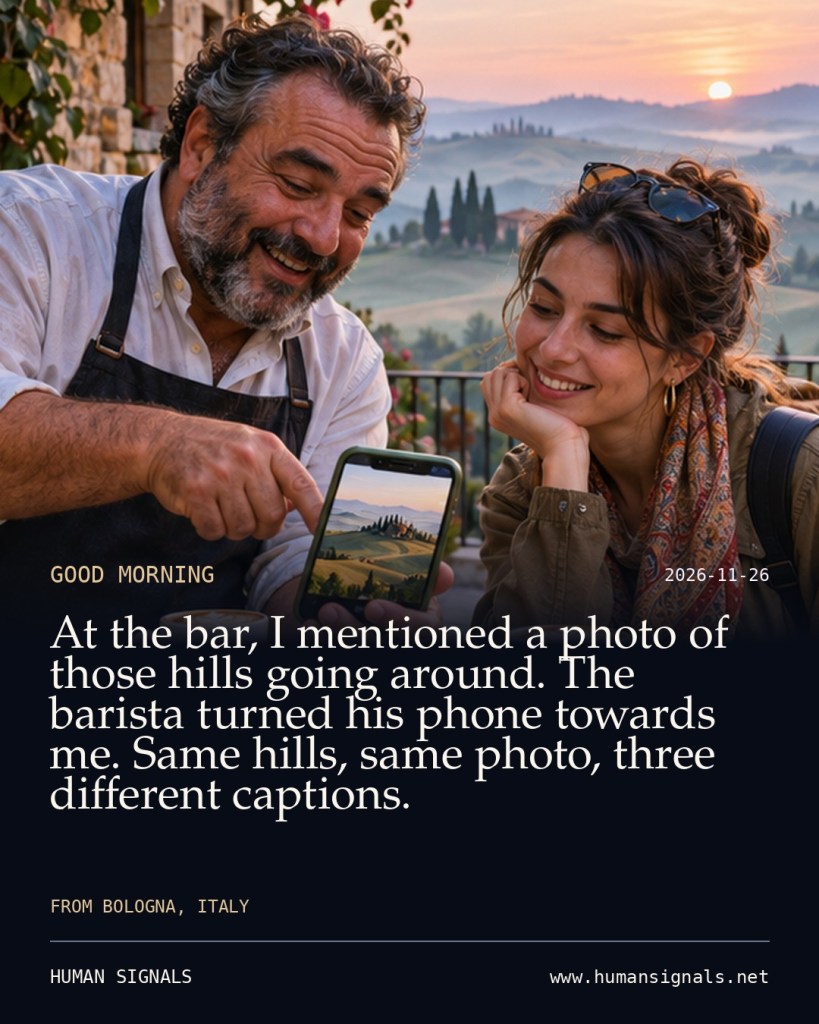
An old photograph shared with a new caption can create the illusion of a recent event, turning yesterday’s landscape into today’s supposed evidence.
In conversations about climate change, environmental transformation, and the future of our planet, accuracy matters. Misleading dates can distort our understanding of how landscapes change over time, regardless of the message someone wants to communicate.
The problem is not always what the camera captured. Sometimes, it is what someone decided to write beneath it.
A real photograph is not automatically proof of a true claim.
Before sharing an image that makes us angry, frightened, or excited, perhaps we should ask a simple question: When was this photograph actually taken?
A morning reflection from Human Signals on visual misinformation, misleading captions, environmental storytelling, and the importance of checking sources before accepting what appears on our screens.